Evaluation of new Diagnostic Instrumentation
This study involves attending the Aston Dry Eye Clinic in Birmingham to have your tear film assessed, your ocular surface examined (including the use of dyes) and your meibomian glands imaged, using a current and next generation instrument (taking ~45minutes). Some participants will be invited to attend a second appointment a few days later so that the repeatability of the devices can be assessed.
Please contact Aston’s research coordinator Moonisah Ayaz (m.ayaz1@aston.ac.uk) if you are interested in knowing more about this study.
Testing of artificial tears
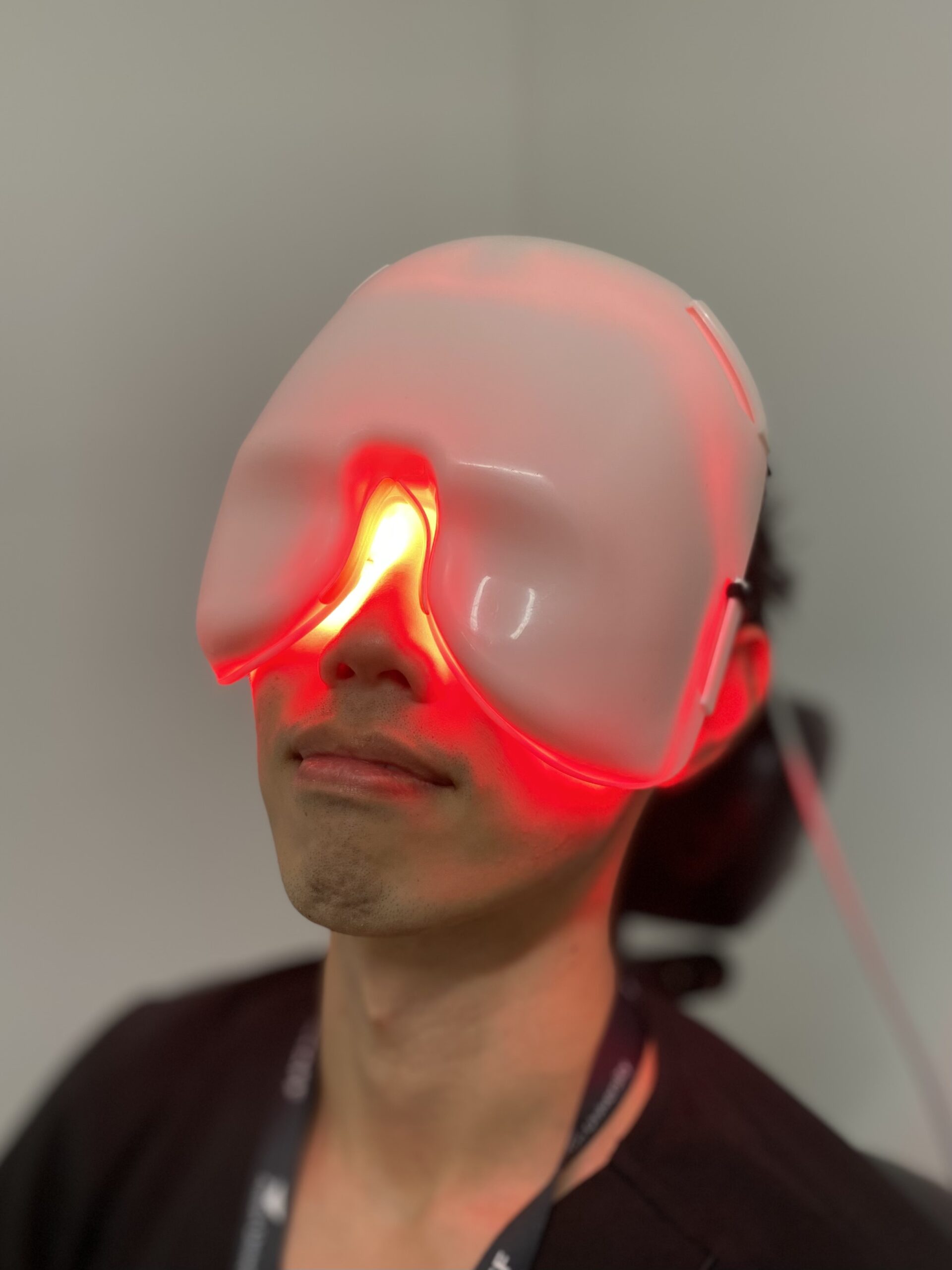
You will have experienced that some artificial tears work better for your eyes than others. However, it takes some time to investigate. We have developed a mask with a gentle warm air flow to standardise the environmental conditions that generally make your symptoms worse, allowing us to test various artificial tests over one day each. This involves a morning appointment to check your eyes and start using the artificial tears, and a late afternoon appointment to wear the mask and have a final assessment of your eyes. This is then repeated on another day with another eye drop.
Please contact Aston’s research coordinator Moonisah Ayaz (m.ayaz1@aston.ac.uk) if you are interested in knowing more about this study.
Quantum Molecular Resonance Treatment (QMR)
As covered in the DEA June 2025 newsletter, QMR emits alternating electrical signals to stimulate the metabolism and natural regeneration of malfunctioning cells and tissues, such as the lacrimal and meibomian glands which are the major glands producing the tear film. Our bodies rely on electrical currents to function, such as to stimulate our muscles or to transmit signals to the brain. Electrical currents, whether naturally or artificially generated, have been shown to affect the body’s repair and healing processes. This can be used to help patients with
dry eye without the need for drops or gel. The study will examine whether people with dry eye including ocular surface staining benefit from QMR. Following a 60 minute assessment of the eye (including the first treatment), there are 3 additional treatments (20 minutes each) at a weekly interval and a follow-up (45 minutes) after 3 months.
Please contact Aston’s PhD researcher Kirsten Mason (k.mason@aston.ac.uk) if you are interested in knowing more about this study.